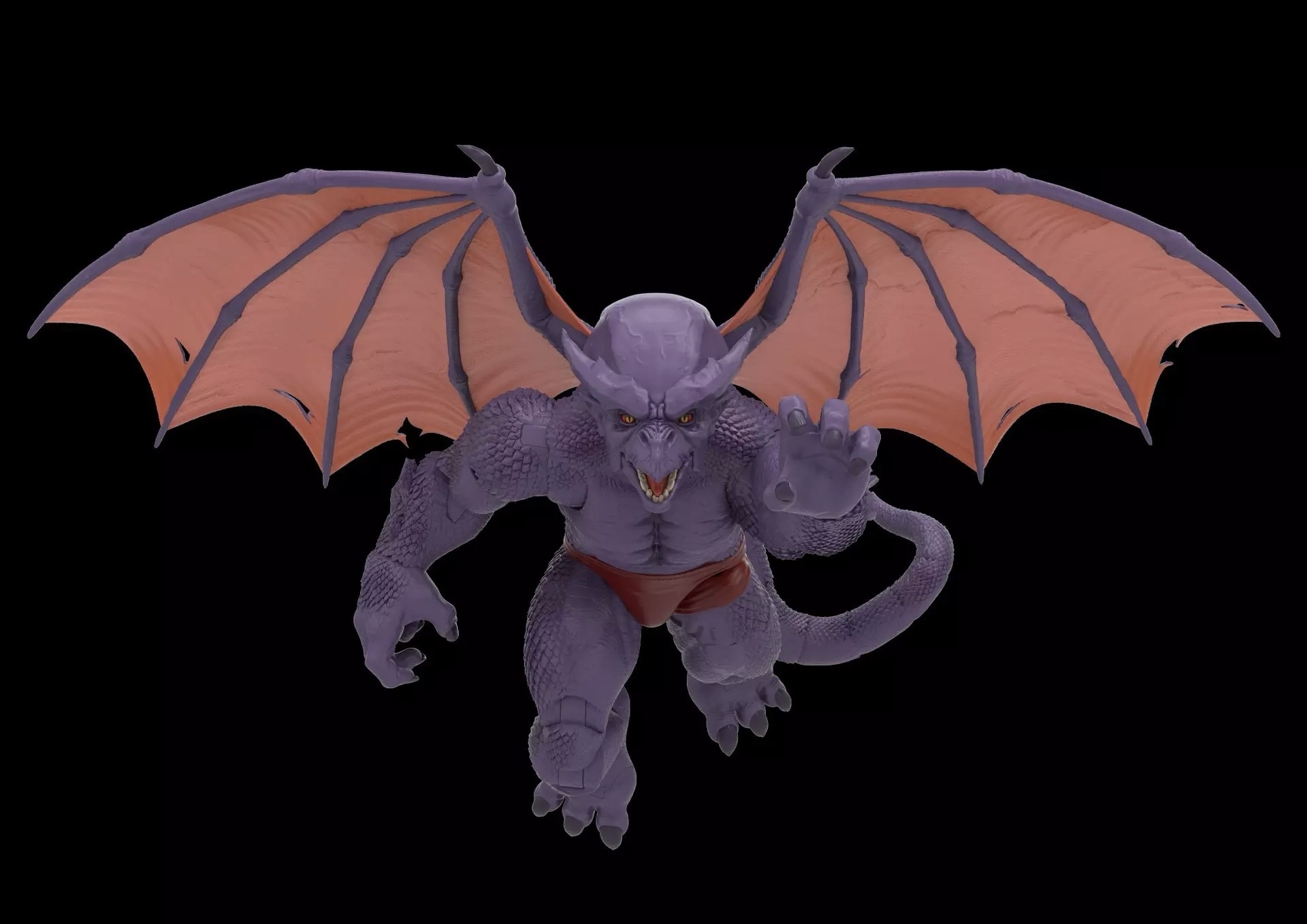
The arrival of the Marvel Legends Dragon Man in Hasbro’s new Ultra Deluxe Made‑to‑Order format marks a moment many collectors have waited nearly two decades for. Dragon Man has long been one of the most elusive characters in the 6‑inch Marvel figure ecosystem—his only major predecessor being the Toy Biz Fantastic Four Classics Dragon Man, a figure that became infamous for its scarcity and aftermarket price inflation. Hasbro’s 2026 release isn’t just a reissue or a modernized update; it’s a full‑scale reimagining of the android dragon as a centerpiece figure designed to anchor a Fantastic Four display. This review dives deep into sculpt fidelity, paint apps, articulation engineering, accessories, manufacturing quirks, and comparisons to earlier versions—crafted for both hardcore collectors and casual Marvel fans who simply appreciate a massive purple dragon with a book and glasses.

The first thing you notice when unboxing Dragon Man is the sheer physicality of the figure. Standing around 10 inches tall, with a 17.5‑inch wingspan and a 10‑inch segmented tail, he occupies space the way a Sentinel or Gargoyle would. Even before posing, he reads as a display anchor—something that demands its own shelf or at least a corner of one. Hasbro’s Ultra Deluxe Made‑to‑Order approach means this isn’t a crowdfund gamble. Collectors saw the final product upfront, ordered it, and Hasbro produced it based on demand.

The packaging reflects that premium positioning: thick cardboard, layered inserts, and a presentation that feels closer to a boutique collectible than a standard Legends release. Once assembled—wings and tail plug in securely—you’re greeted with a sculpt that leans heavily into Jack Kirby’s original design language. Dragon Man looks like he stepped out of Fantastic Four #35, but with modern detailing that respects the character’s evolution into a gentle, book‑loving member of the Future Foundation.


Sculpt

Hasbro’s sculpting team clearly treated Dragon Man as a passion project. The head alone is a showcase of layered textures: ridged brow plates, vein‑like cranial lines, a beak‑like snout, and an articulated jaw that reveals individually sculpted teeth. The tongue—fully poseable—adds an unexpected level of expressiveness. You can create roaring battle poses, curious “tilted head” expressions, or even gentle, contemplative stances when paired with the glasses accessory. The torso and limbs are covered in overlapping scales, each with micro‑texturing that catches light beautifully. The sculpt avoids the “smooth plastic slab” problem that large figures sometimes suffer from. Instead, Dragon Man feels like a hybrid between a biological creature and a manufactured android—exactly the tone Kirby intended.


The wings are another highlight. Their leathery membranes stretch between bony struts, with sculpted tears, wrinkles, and tension lines that give them a realistic sense of weight. They’re unmistakably dragon wings, but they still maintain the Marvel aesthetic rather than drifting into generic fantasy territory. The tail is segmented and textured from base to tip, functioning as both a posing tool and a visual anchor. It’s long enough to wrap around other figures or serve as a counterbalance for dynamic stances.


Paint Applications
Large figures often suffer from flat paint or minimal shading, but Dragon Man avoids that pitfall. His base color—a muted purple‑gray—matches his classic comic palette, and Hasbro applied subtle washes to deepen the recesses of the scales and wing membranes. It’s not as aggressively shaded as the Toy Biz version, but it’s far more refined and consistent. The wings benefit from a slightly different tone than the body, giving them visual separation. The edges are darkened to emphasize the sculpt, and the membranes have a soft gradient that prevents them from looking like a single molded piece. Eyes, teeth, and tongue are cleanly painted with minimal bleed.


The eyes in particular have a glossy finish that makes them pop against the matte skin texture. Is the paint at import‑figure levels? No. But for a mass‑produced Marvel Legends release of this size, it’s above average and leaves plenty of room for customizers who want to push the shading further.

Articulation
Dragon Man boasts over 40 points of articulation, which is impressive for a figure of his bulk. The engineering strikes a balance between poseability and structural stability.
- Head & Neck: Ball joint with excellent range; combined with the articulated jaw and tongue, the head can convey aggression, curiosity, or calm.
- Jaw & Tongue: Independent articulation adds personality rarely seen in Legends figures.
- Torso: Upper torso ball joint allows crunching and twisting, though the mass naturally limits extreme poses.
- Arms: Ball‑hinge shoulders, bicep swivels, double elbows, and articulated wrists.
- Legs: Ball‑jointed hips, thigh swivels, double knees, and toe articulation for stability.
- Tail: Fully poseable along multiple segments, useful for counterbalancing or dynamic posing.
- Wings: Articulated at the base, with interchangeable open and closed configurations.
Dragon Man isn’t a hyper‑acrobatic figure, but he’s far more poseable than his size suggests. You can achieve flying poses, looming stances, defensive curls, or gentle reading poses with ease.


Accessories
Hasbro included a surprisingly character‑rich accessory set:
- Two sets of wings:• Open wings for dramatic display.
- Closed wings for shelf‑friendly posing.
- Alternate hands:• Combat/gripping hands.
- Relaxed hands for reading or neutral stances.
- Glasses:
A delightful nod to Dragon Man’s Future Foundation era, where he embraced learning and gentleness. - Future Foundation book:
Perfectly scaled, with sculpted pages and a cover that references his time with the team.
These accessories allow Dragon Man to embody both sides of his character: the towering android weapon and the gentle, scholarly ally.


Dragon Man is designed for the 6‑inch Marvel Legends scale, but he towers over standard figures. Next to Reed Richards or Johnny Storm, he looks appropriately massive. Even beside The Thing, Dragon Man still dominates the scene. Open wings require significant shelf space—similar to NECA Gargoyles figures—so collectors with limited room will likely rely on the closed wings. The tail also demands depth, making him better suited for wide shelves or dedicated display cubes.

Comparisons to Other Dragon Man Figures
The Toy Biz Fantastic Four Classics Dragon Man version remains beloved for its extreme paint shading and sculpt complexity. However, it’s smaller, less articulated, and nearly impossible to obtain at a reasonable price. Hasbro’s version surpasses it in scale, engineering, and overall presence, making it the new definitive Dragon Man for most collectors. Compared to figures like Giant‑Man, MODOK, or large Build‑A‑Figures, Dragon Man feels more character‑specific and expressive. The glasses and book alone give him more personality than most oversized Legends releases.

The Marvel Legends Dragon Man is one of Hasbro’s strongest large‑format releases to date. It’s not cheap, and it demands space, but it delivers on sculpt fidelity, articulation engineering, and character‑driven accessories in a way few Legends figures do. For Fantastic Four fans, Kirby purists, and collectors who missed the Toy Biz version, this is an easy recommendation. Dragon Man finally gets the modern, premium treatment he deserves. For casual collectors, the price and size may be intimidating, but the figure’s charm—especially with the glasses and book—makes it one of the most unique Marvel Legends pieces ever produced.
Check Price And Availability
Amazon- https://amzn.to/3UNZSIV
This post includes affiliate links. If you make a purchase through these links, I may earn an affiliate commission.

Leave a Reply