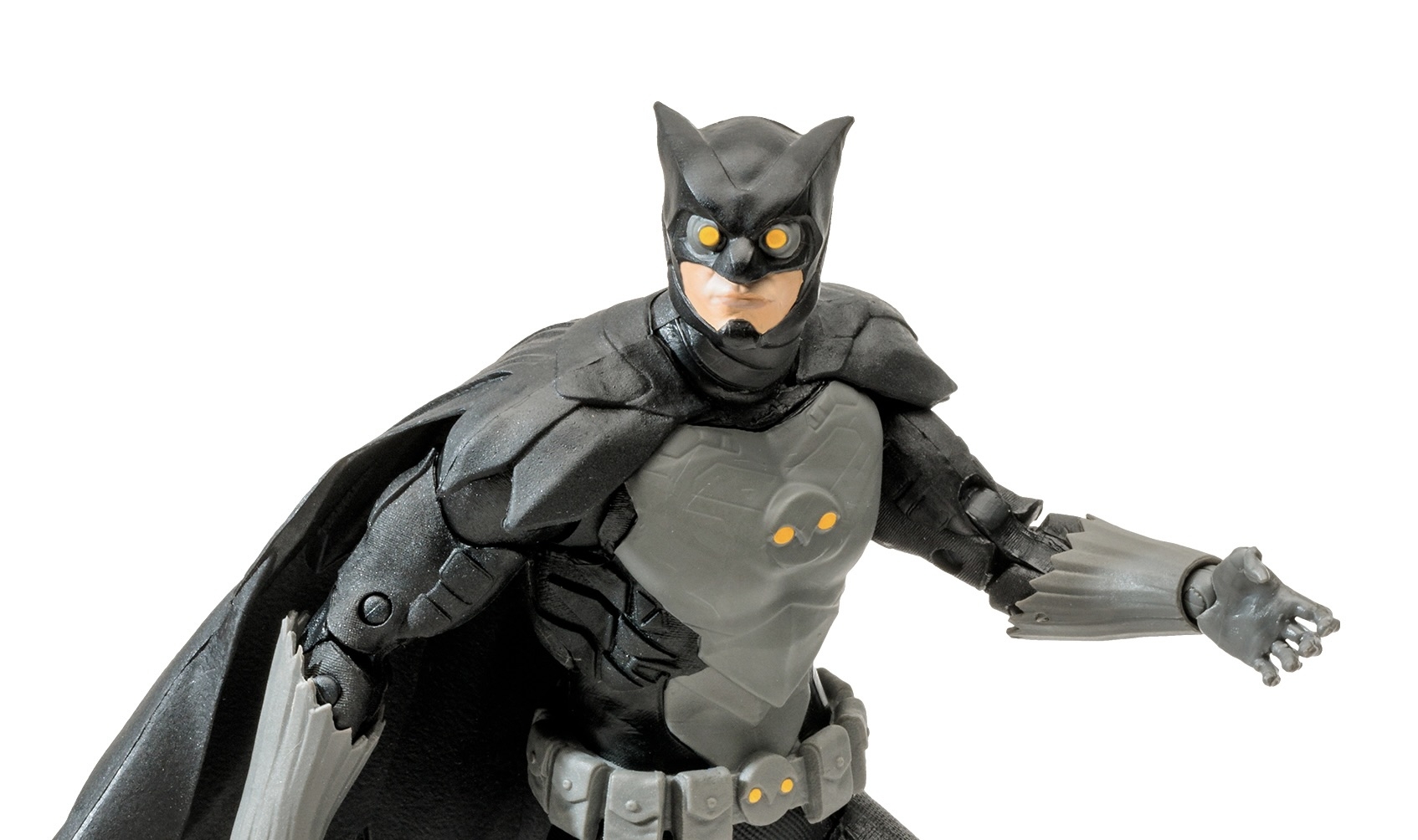
In the vast, ever-expanding pantheon of the DC Multiverse, few villains resonate with the chilling, existential “what if” factor quite like Owlman. Thomas Wayne Jr.—the Earth-3 twisted counterpart to the Dark Knight—represents the absolute corruption of the Batman archetype. Where Bruce Wayne uses his trauma to fuel a crusade for justice, Thomas Wayne Jr. uses his to fuel a campaign of nihilistic control. When McFarlane Toys announced their interpretation of this character as part of the Crime Syndicate wave, collectors, comic historians, and toy enthusiasts alike took notice. This isn’t just another Batman repaint; it is a fundamental pillar of the DC Multiverse’s “dark mirror” narrative. Whether you are a seasoned “completist” tracking down every Build-A-Figure (BAF) piece or a casual fan looking for the perfect shelf centerpiece to represent the darker side of the Justice League, this comprehensive review explores every facet of the McFarlane Toys DC Multiverse Owlman.

To understand the figure, you must understand the weight of the character. Owlman is the mastermind of the Crime Syndicate of America. Unlike the Batman of Earth-0, who operates under a strict code of ethics, Owlman is a ruthless assassin who believes that in a universe devoid of objective morality, power is the only truth.
The figure’s design is drawn primarily from the Crime Syndicate miniseries (2021) written by Andy Schmidt, where the character’s look was refined to emphasize a leaner, more surgical aesthetic. By releasing this figure in the DC Multiverse line, McFarlane Toys provided fans with an essential “antagonist” figure that allows for the creation of classic “Hero vs. Villain” shelf displays that are both visually striking and narratively significant.
Sculpting:
McFarlane Toys has carved out a reputation in the 7-inch scale for a high level of detail, and the Owlman sculpt is a masterclass in texture. The most striking element of the figure is, naturally, the mask. Unlike the rounded, utilitarian look of the standard Batman cowl, the Owlman cowl features sharp, angular features that mimic the predatory brow of an owl. The “ears” are replaced by sweeping crests that frame the face, giving him a more menacing, aggressive profile. The sculpt of the eyes—painted in a harsh, cold white—is recessed deep within the cowl, which adds a sense of depth that commands attention.

The body sculpt utilizes a mixture of hard plastic for the armor and slightly softer, more pliable materials for the tactical suit elements. The plating on the chest, forearms, and shins has a distinct, layered look that feels more “tactical” and less “spandex.” The cape is a point of contention among collectors, but it serves the sculpt well; it features geometric, angular folds that imply a degree of heaviness and structure, rather than the flowing, ethereal nature of standard Batman capes.
Notice the integration of the “talon” motifs on the gauntlets. While they aren’t as prominent as the sharp blades on some Batman suits, they serve as a subtle nod to the character’s avian theme—a design choice that separates him from the more common “bat-tech” aesthetics.


Articulation:
For a modern collector, a figure is only as good as its poseability. The McFarlane DC Multiverse line uses a proprietary “Ultra Articulation” scheme, which typically boasts up to 22 points of movement.
The Range of Motion
- The Head/Neck: Due to the flared cowl design, the neck articulation is somewhat restricted compared to other figures like Superman or Nightwing. However, it still allows for enough tilt to give him a “calculating” look when staring down a foe.
- The Shoulders and Torso: This is where the figure excels. The butterfly joints allow for a wide range of arm movement, which is essential if you plan to pose him with his hands crossed, reaching for a gadget, or in an intimidating combat stance.
- The Legs: The double-jointed knees and ankles are tight, providing excellent stability. Even with the cape’s weight, the figure stands firmly without needing a specialized base—though a base is included for those who prefer extra security.

The cape is the primary limiting factor. Because it is molded from a durable, slightly stiff plastic, it creates a “curtain” effect that can interfere with the back and shoulder rotation. For photographers or display artists, this means you will spend a good deal of time “finessing” the cape to ensure the figure doesn’t look hunched.

Paint Applications:
The paintwork on the DC Multiverse line has seen significant evolution. The Owlman figure is a prime example of “dark-on-dark” color theory done correctly. The primary color scheme relies on varying shades of gunmetal grey, matte black, and deep, muted blues. By utilizing different finishes—matte for the fabric, metallic for the armor, and semi-gloss for the accessories—McFarlane creates a multi-dimensional look that doesn’t feel “flat” even under direct display lighting. It is worth noting the differences if you are hunting for the Gold Label variant. Where the standard release focuses on a more realistic, tactical grey-and-black palette, the Gold Label version leans heavily into a deep navy blue. This homage to the classic Silver Age comic color palettes is a brilliant touch for collectors who prefer a more retro, “comic-book-accurate” aesthetic over the gritty, modern realism of the standard figure.
Accessories:
The Crime Syndicate wave of figures was famous for the Build-A-Figure (BAF) gimmick: Starro the Conqueror. Owlman comes with the articulated arms for the Starro figure. As a standalone piece, the arms are substantial and well-sculpted, adding significant value to the purchase. If you collect the full wave (Superwoman, Ultraman, Power Ring, etc.), the resulting Starro is arguably one of the most impressive BAFs McFarlane has ever produced.

The Baby Starro
The real highlight for many is the inclusion of the “Baby Starro”—the tiny, parasitic version of the creature. This piece is made of a soft, squishy PVC material. Its inclusion is ingenious because it is universally compatible with almost any other 7-inch figure in your collection. You can attach it to the face or chest of your favorite heroes, creating an instant “Starro-infected” scenario for your display shelf. Critical Note: While the accessories are high-quality, the omission of character-specific weapons—such as his signature throwing stars or a specialized utility belt accessory—is a slight disappointment. Adding a few small, scale-appropriate “owlarangs” would have arguably made this the definitive version of the character for years to come.
Older lines from DC Direct often favored static, museum-pose statues. If you have an older DC Direct Owlman, you likely appreciate the sheer sculpt quality and the paint density, but you’ll find it lacks the dynamic motion of the McFarlane figure. If you want to pose your figures fighting, the McFarlane version is the clear winner. When placed next to the Batman: Hush or Detective Comics #1000 Batman, Owlman stands as a perfect physical foil. He is slightly leaner and looks more “tech-reliant,” which provides a great visual contrast. He fits seamlessly into a modern shelf display, and the scale is consistent enough that he doesn’t look out of place when posed alongside the rest of the Justice League.
The Pros:
- Sculptural Excellence: Captures the modern, terrifying aesthetic of Earth-3’s master strategist.
- Display Versatility: Looks incredible both in static, museum-style poses and dynamic, action-oriented combat setups.
- Value: High-quality construction and the essential Starro BAF components make the price point feel very fair.
- The “Baby Starro” Accessory: A brilliant, fun, and highly creative inclusion that adds play value beyond just the figure itself.
The Cons:
- Cape Limitations: Can restrict neck articulation, requiring patience to pose correctly.
- Minimalist Accessories: Lacks specific character-focused gear like owlarangs or alternate hands.


If you enjoy the Owlman figure, you are likely looking for what comes next. The beauty of the DC Multiverse line is the constant influx of new waves. If you’ve completed your Crime Syndicate build, you might consider looking into the Dark Nights: Metal wave to keep that “corrupted justice” theme going, or checking out the latest Batman Beyond releases if you enjoy the darker, futuristic take on the cowl. The Owlman DC Multiverse figure is an homage to one of DC Comics’ most compelling alternate-reality villains. By successfully balancing the tactical, gritty aesthetic of the modern comics with the articulation needs of the modern collector, McFarlane Toys has delivered a hit. This is a figure that doesn’t try to be everything; it tries to be the definitive version of this specific character, and it succeeds. It captures the menace of Thomas Wayne Jr. perfectly, and it fits into any collection as an immediate centerpiece. Whether you are a long-time reader of Justice League comics or simply someone who appreciates a well-designed, moody, and intricate action figure, the McFarlane Toys DC Multiverse Owlman belongs in your collection.

Leave a Reply